
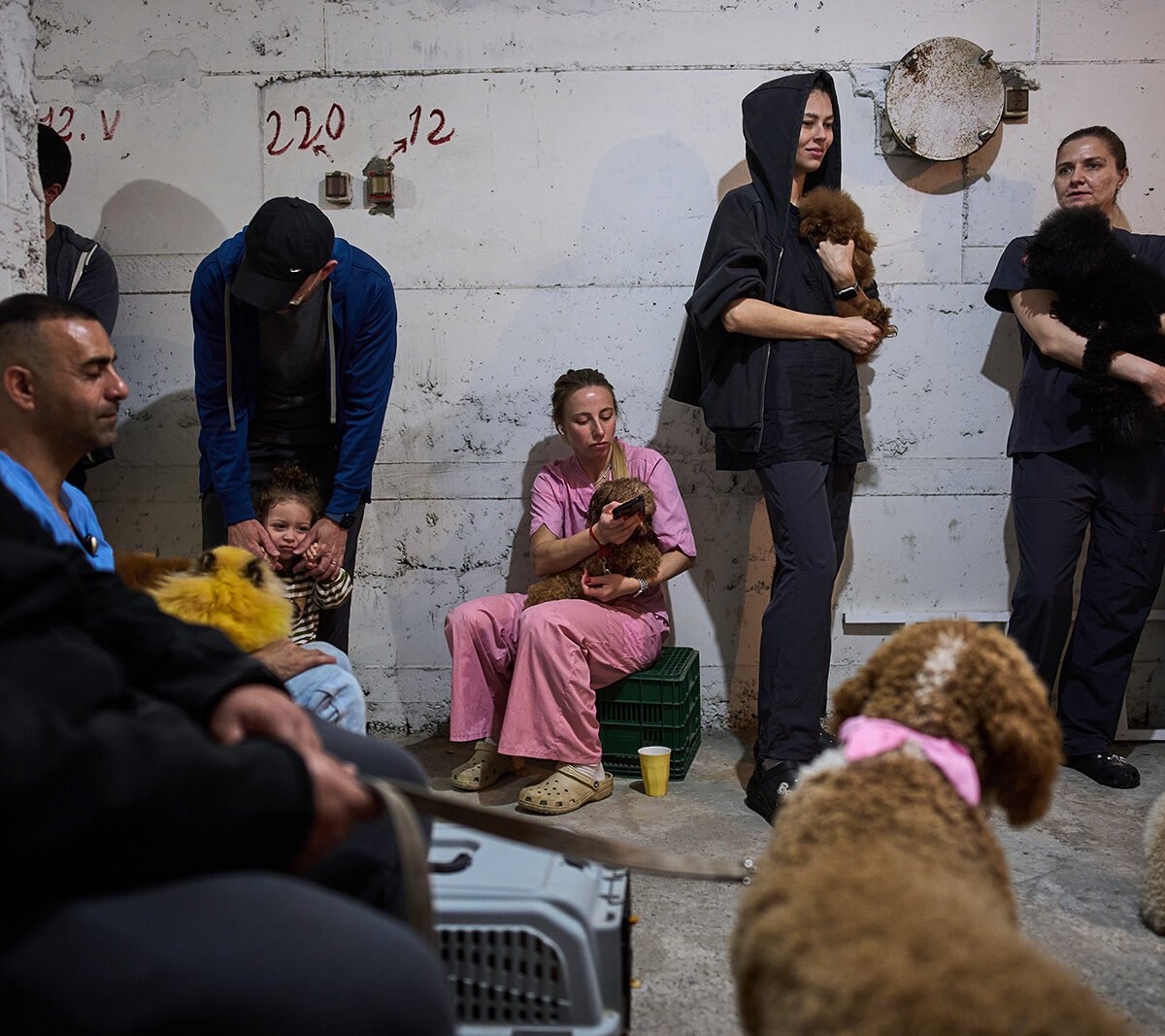
The story of Passover starts in mitzrayim, the Hebrew word for Egypt, which symbolically means “the narrow place.” For millions of Israelis like myself, the Jewish festival of freedom will be marked this year from the narrowest of places: a bomb shelter.
Across Israel, tens of thousands of shelters have become part of our daily life. They are rarely comfortable, often cramped and makeshift, and for some families, especially in the North, access is inadequate. Yet even in these spaces, life does not stop. People gather, improvise, steady one another and continue living.
There is a painful irony in that reality, but also something deeply resonant with the Passover story itself. The journey from slavery to freedom was never simple or serene. It was marked by uncertainty and fear, but also endurance.
This year, many Israelis are living with all three. With the war with Iran and Hezbollah in Lebanon, whole neighborhoods have been destroyed. Thousands have been injured and thousands more evacuated from their homes to hotels hundreds of miles away. Families have been uprooted, schools and workplaces are empty, and the sense of normalcy that once anchored everyday life has been profoundly shaken.
Like so many parents, I spend my days worrying about my children’s safety while helping others navigate the anxiety that returns with every siren, of which there have been many in the last five weeks. After so much hardship since Oct. 7, 2023, the emotional toll is immense. But so too is the resolve people continue to show, day after day, in homes, community centers, bomb shelters and on the streets.
Passover asks us not only to remember the story of our ancestors, but to see ourselves within it. Usually, we do that around a family table, in the warmth of home and tradition. This year, some will do so in more fragile settings, surrounded not only by relatives and friends, but by neighbors who, through shared vulnerability, have become something closer to family. And under the sound of sirens and interceptors overhead, people will still gather to tell the story of freedom, survival and hope.

Some familiar holiday rituals may feel different this year. Reclining in comfort may be replaced by folding chairs and concrete walls. The broken matzah may speak not only to ancient affliction, but to the fractured reality so many are living through now.
The symbol that will resonate most deeply for me this year is the salt water. At every Passover table, we dip a green vegetable into it to remember the tears of our ancestors in slavery. This year, those tears feel close, personal and painfully current. Making that bowl of salted water is usually a mindless task of turning on the tap to warm and shaking in a hefty amount of salt. This year, I feel like I need buckets, not a bowl.
I think of Talya, a woman in her 40s from Beit Shemesh, whom I met after a devastating rocket barrage struck her city. One missile hit near her home, killing her husband and shattering the life her family had known. In an instant, she was a widow, homeless, and even without a place to sit shiva, the seven-day Jewish mourning ritual, with her terrified children, including a son with severe disabilities, in need of her support. Her pain was overwhelming.
What stays with me most from our meeting is her defiance and what she said helped her survive: the people who held her up, cared for her and made sure her family was not alone. In the midst of devastation, she spoke not only of loss, but of love, solidarity and the stubborn insistence that Am Yisrael Chai—the Jewish people live. In her narrow place, she found strength in others and the expansiveness of peoplehood.
That spirit is something I have seen again and again throughout this conflict while delivering humanitarian aid to Israel’s hardest-hit cities. I have seen volunteers arrive by the tens of thousands to support farms, businesses, schools and hospitals while reservists were away. I have seen neighbors deliver food, medicine and comfort to people unable to leave their homes. I have seen communities invest extraordinary amounts of time, care and resources for those who lost the most.
This points to something enduring and deeply important: The strength of a society is measured not only by what it suffers, but by how it responds. And in this period of modern plagues, Israelis have shown remarkable reserves of resilience, compassion, mutual responsibility and the ability to sustain daily life under extraordinary pressure. It mirrors the Passover story itself, balancing memory and real time, grief and gratitude, hardship and perseverance. When this war recedes, like our journey out of ancient Egypt, it will be our responsibility to rebuild what was broken and shape what comes next.
In the harsh fluorescent light of a basement shelter, that is what I will carry with me into the Seder. The desert may still feel vast, and displacement may still weigh heavily. But being there for one another, sustaining one another and refusing to surrender our sense of purpose and shared destiny is itself a kind of freedom, and a timeless one at that.
(Avital Rosenberger-Seri, based in Jerusalem, is the head of the Israel emergency unit for the American Jewish Joint Distribution Committee. The views expressed in this commentary do not necessarily reflect those of Religion News Service.)