

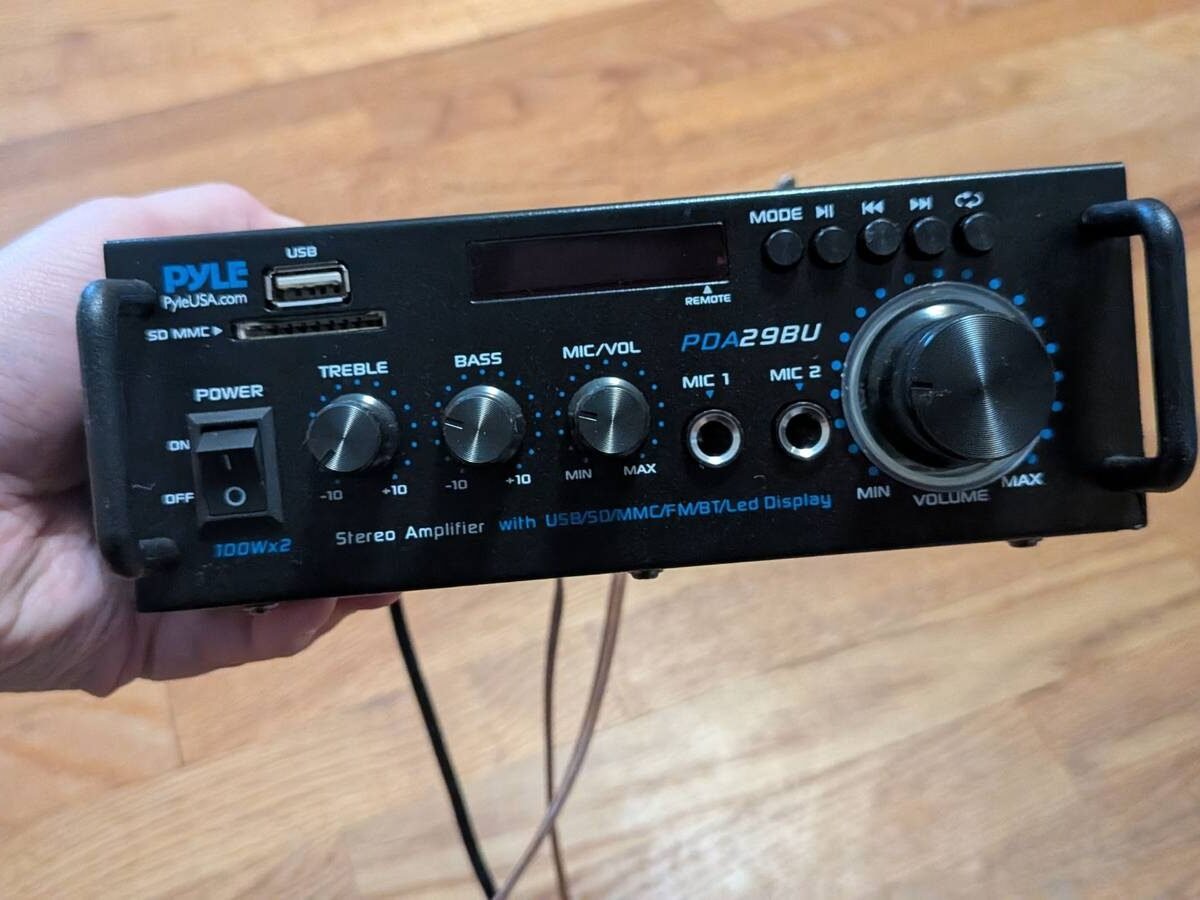
I like buying used things all the time, and I’ve even bought a used receiver. While it worked out fine for me, I was made well aware of several issues when I plugged it in to get it going. It wasn’t anywhere as simple as plugging in a new receiver, reading the manual, and calling it a day. I had to do a lot of troubleshooting, download an app, and even make an additional purchase on Amazon before I got everything working.
It was a lot of hassle, and although it worked out in the end, it certainly wouldn’t be worth the time or effort for a lot of people. There are a lot of downsides to buying something used, especially if you shell out a few hundred dollars. If you’re able to do your proper research, you can eliminate a lot of the risks, but that’s not always possible. Receivers are quite tricky themselves, and if you’re shopping used, I think you should be aware of these things.
You can’t always test it beforehand
There’s no telling if it works

I bought a receiver from Goodwill that was shipped to me, so I was gambling on whether it would work. With electronics, it’s nice to test things out beforehand, and Goodwill typically offers a way to do that with outlets near the electronics. I didn’t have that luxury due to it being shipped to me, so there was no telling what I was going to have delivered.
Considering I only paid $15 for the receiver plus shipping, it wasn’t going to be the end of the world either way if it didn’t work. Fortunately, it worked, but if I were spending $100 or so on it, I’d be a lot more wary. If you shop somewhere like Facebook Marketplace, you can often go in person for testing. On eBay, it also never hurts to ask the seller if they tested the product beforehand. If they lie, and you get sent a broken product, refunds are usually easy to get.
Don’t expect the accessories
I had to buy them separately

The dangers of buying used mean you’re not getting everything included in the box. That’s usually why getting some complete-in-box costs extra, but there are many things that don’t need the extra accessories. However, a receiver isn’t one of those. After getting mine, I found out that I couldn’t set it up properly without a remote, but it didn’t ship with one. The nice thing is that you can get a remote easily from somewhere like Amazon for just a few dollars, so it didn’t hold me back for long.
It’s something that can easily sneak up on you and sour the experience. You should be able to see ahead of time if the receiver you’re buying is shipped with a remote or not. If you see that it’s not, you might be able to time your order and get a remote delivered the same day. If not, you might be able to download a remote app on your phone to control the receiver.
Warranty is not included
Better hope nothing goes wrong

Buying used often means you aren’t getting a warranty. Depending on how old the receiver is, a warranty might not be something you’re concerned with. For what it’s worth, I’ve never had to use a warranty on anything I’ve bought, so not getting a warranty isn’t the end of the world for me. On the other hand, it’s nice to have a safety net in case something goes wrong.
Newer receivers have so many features that it feels like there’s more that can go wrong when compared to older models. If that’s a fear you have, buying something new that comes with a warranty is your best bet. If you’re willing to roll the dice, then go ahead and save some cash and find something used. They each have their pros and cons.
Shady people can ruin the experience
It’s easier to be ripped off

Be wary of an all-cash transaction because that’ll be much harder to refund. A major downside of buying from somebody is that there’s no telling what they did with the receiver before you, unless they tell you. If you get sold something that turns on but doesn’t work after a few minutes, you have better odds of getting a refund if you went through official channels. If you gave somebody a $100 bill in a parking lot, you can probably kiss that money goodbye.
There are a lot of downsides to buying something used, especially if you shell out a few hundred dollars.
Fortunately, I haven’t had an experience like that myself, and I’ve bought plenty of things from in-person meetings. The difference is I’m not as keen on spending a lot of money on a purchase like this, and I’d like to keep my spending limited to about $50 in this scenario. I would like to imagine most people are trustworthy when selling something, but all it takes is one bad experience to make you never do it again.