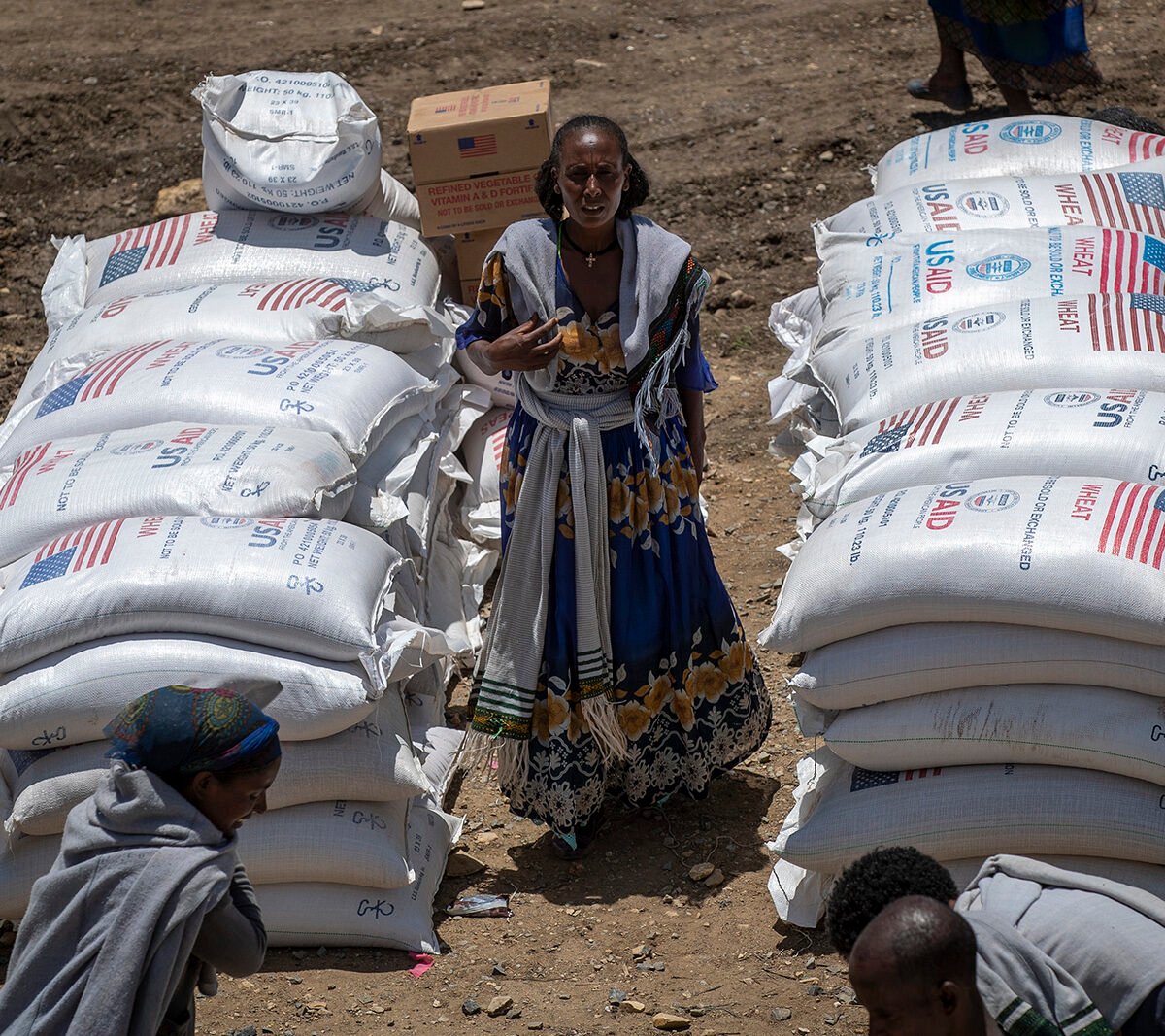
NAIROBI, Kenya (RNS) — African Christian leaders attending a conference with faith-based health organizations in late November called for countries on the continent to do more to replace U.S. Agency for International Development funds that were cut by the Trump administration earlier this year.
“We don’t have to wait until the taps are finally locked in Europe and America,” said Catholic Bishop Matthew Kukah of the Diocese of Sokoto, in Nigeria, at the Thursday (Nov. 27) closing press conference for the gathering. While African leaders appreciate foreign support, “it shouldn’t be an excuse for us not doing the things we need to do in Africa,” the bishop said.
“We need to begin to raise resources in our own countries to fill up the gap,” warned the Rev. Francis Mkandawire, general secretary of the Evangelical Association of Malawi, who condemned the idea of “business as usual.” “There’s fatigue out there and it’s affecting us already.”
The conference, “One Faith, One Voice: A Shared Commitment to Health and Wholeness in Africa,” was attended by some 50 Catholic and Protestant representatives from 10 African countries, including women and youth leaders and the heads of Christian health associations.
The leaders urged their governments to make good on the 2001 Abuja Declaration, an agreement in which the 55 African Union countries made it a goal to allocate 15% of their budgets to the health sector. A 2023 Human Rights Watch report showed that in 2021, only two of the signers were meeting the goal.
The conference, called to discuss the health of the region amid a crisis of shrinking resources and a growing need, was organized by the Africa Christian Health Associations Platform, the All Africa Conference of Churches and Christian Connections for International Health.
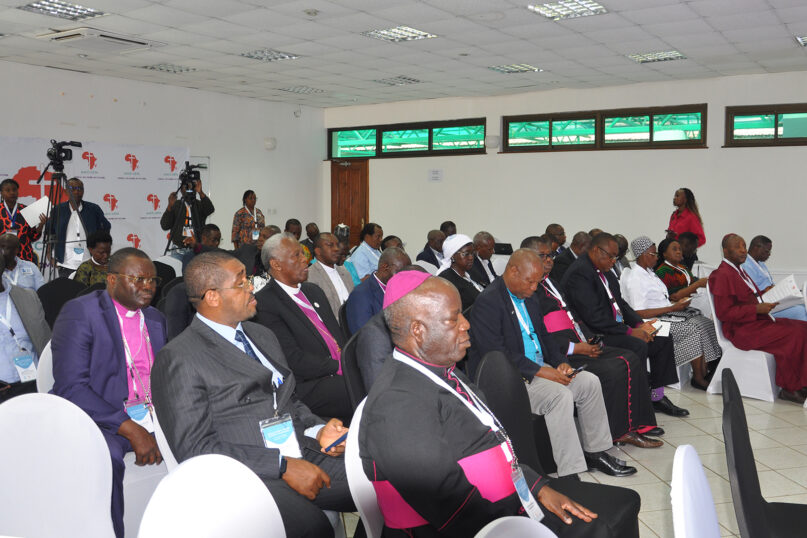
People attend the closing press conference of the “One Faith, One Voice: A Shared Commitment to Health and Wholeness in Africa” conference, Nov. 27, 2025, in Nairobi, Kenya. (RNS photo/Fredrick Nzwili)
For years, faith-based health networks have helped to coordinate the work of thousands of local health institutions, becoming trusted partners in providing relief and treatment for deadly diseases such malaria, tuberculosis and HIV.
Those organizations had long received funding from the U.S. government, delivered through grants and cooperative agreements from USAID and the 22-year-old President’s Emergency Plan for AIDS Relief, known as PEPFAR.
But in January, President Donald Trump ordered a freeze on funding, pending a review and realignment of foreign assistance with his America First policy. The European Union has also announced reductions in contributions to foreign assistance.
The abrupt stoppage of the funding has had a grave impact on the organizations’ work, the participants said. “We have been impacted by the cuts and the impact includes on our health workers, on service delivery for HIV, for tuberculosis, for malaria,” Nkatha Njeru, CEO of the Africa Christian Health Associations Platform, told reporters.
“We have patients who have been receiving care that now have to seek care in places where the health workers are no longer available in the numbers they were,” said Njeru, whose organization brings together 40 national associations in 32 sub-Saharan African countries and manages 10,000 health care facilities. Delivering 70% of services in some countries, the organization reaches more than half a billion people.
“We continue to feel the impact on community programming as well, where services that were available to people in the community are no longer available. … We also have impact on supply chain in many areas as well,” she said.
Without USAID support, said the participants at the conference, lives are being lost to HIV, malaria and tuberculosis, as health facilities run short of supplies and health workers go unpaid.
Karen Sichinga, CEO of the Churches Health Association of Zambia, said U.S. funding for essential AIDS drugs delivered by the organization is continuing, and the organization had been buying and distributing antiretroviral drugs to 700 hospitals in parts of the country.
But financial support for community-led outreach, crucial in mobilizing and ensuring treatment adherence, was ended, Sichinga said. “When you cut community-led activities, you can’t expect to achieve much, because you need to mobilize communities toward treatment,” she said.
“We have treatment adherents, particularly the adolescents, who are becoming tired. Some of them are actually saying, ‘Why me?’ And these would be the adolescents who were born with HIV infection. And they’re saying, ‘It’s not my fault,’” Sichinga added.

Karen Sichinga, CEO of the Churches Health Association of Zambia, speaks at the closing press conference of the “One Faith, One Voice: A Shared Commitment to Health and Wholeness in Africa” conference, Nov. 27, 2025, in Nairobi, Kenya. (RNS photo/Fredrick Nzwili)
Njeru said the faith leaders are aware that teams from the Trump State Department have been negotiating bilateral health arrangements with many of the African countries and that the faith sector has been asked to join those conversations. “Our plea to the State Department of the U.S. government is that they continue to engage the faith sector substantially, so that we can help our specific governments to continue providing health care to our citizens,” she said.
The conversations are at various stages in different countries, according to Njeru. “Our plea is being heard in some countries, but in other countries, we still need to continue to talk to both our governments and the State Department to understand why the faith sector needs to be engaged substantially,” she said.
The faith leaders said they are not sitting idle. In a statement released at the end of the meeting, they committed to deepening collaboration with national governments, the private sector and international partners.
The clerics called for more government investment in health, which they called a moral and spiritual priority. They also urged African governments to crack down on corruption, citing reports of staggering amounts of funds being sent by politicians and businessmen to European banks and investments.
Kukah challenged the political leaders in Africa to join the search for local funding, saying the faith-based organizations and institutions need their help. “The question is, what are we doing in Africa?” said Kukah. “But there needs to be greater collaboration, because the church has only a moral voice that it can add.”